Mesh coils use a flat, perforated metal strip that heats fast and evenly, which is why they dominate pod kits and sub-ohm tanks. Ceramic coils use a porous ceramic core that holds liquid, and they are known for steady flavour and fewer dry hits. Here is how to choose.
The short version
- Mesh: large heating surface, quick ramp-up, bold flavour and more vapour.
- Ceramic: porous core, steady flavour, a reputation for fewer dry hits and less spitback.
- Mesh is by far the most common; ceramic is a niche option in a few coil families.
- Try both if your coil range offers them, such as the Smok Nord coils.
What each coil is
Every coil heats liquid soaked into a wick. The difference is the shape of the heater and what holds the liquid.
A mesh coil replaces round wire with a flat strip of perforated metal wrapped in cotton. The wider surface touches more wick at once, so it heats quickly and evenly. Vaporesso describe their mesh coils as having a larger surface area that increases flavour, and most coils on our shelves are mesh.
A ceramic coil uses a porous ceramic core around or instead of cotton. The ceramic holds liquid and spreads heat. Vaporesso say their CCELL ceramic coils reduce spitback and the chance of dry hits.
Where you will find them
Look through our vape coils range and mesh is everywhere: Geekvape Z coils at 0.15 to 0.4 ohm, Vaporesso GTX coils from 0.15 to 1.2 ohm, and the built-in coils in most pod kits.
Ceramic is rarer. The Smok Nord coils are a good example of a family that offers both, with 0.6 and 0.8 ohm mesh alongside a 1.4 ohm ceramic option. That makes them an easy way to try the two side by side in the same device.
Ceramic options tend to sit at the higher resistance, mouth to lung end of the range.
- 0.15 ohmZ coil mesh
- 0.6 ohmNord mesh
- 0.8 ohmNord mesh
- 1.4 ohmNord ceramic
Inside the coil
Whichever type you choose, the coil head sits in the same place in a tank: at the base of the chimney, drawing liquid in through holes in its side and air in from the airflow ring below.
That is why both types are sensitive to the same things. If liquid cannot reach the wick fast enough, you get a dry hit. If too much liquid floods in, you get gurgling and spitback.
Ceramic's reputation for fewer dry hits comes from the core holding a reserve of liquid. Mesh's reputation for flavour comes from heating more of the wick at once. Neither escapes the basics: prime it, keep it topped up and stay inside its wattage range.
- 1Drip tip
- 2Top cap and fill port
- 3Glass and chimney
- 4Coil head
- 5Airflow ring
- 6510 connection
- 7Mod: screen and buttons
- 8Battery bay
Myths about coil types
Coil marketing loves a big claim. Here are four common ones, checked against how coils actually work.
The most widespread is that one type is simply better. In reality, each suits different preferences. A heavy fruit vaper who loves bold flavour will probably prefer mesh. Someone who hates harshness and wants every puff to taste the same may prefer ceramic.
Lifespan is the other hot topic. Ceramic is often said to last longer, but sweet liquids clog any coil, and how you vape matters more than what the coil is made of.
Which one suits you
Pick the coil to match the vape you want, not the marketing on the box. If your device only takes mesh pods, that settles it, and you are in good company.
If your coil family offers both, try a pack of each. At around £2 a coil, it is a cheap experiment. Give each one a few days with the same liquid so you are comparing like with like.
Liquid matters as much as coil type. Very sweet dessert and candy liquids clog every coil faster, while clearer fruit, menthol and tobacco liquids are kinder to both.
What do you want most from a coil?
Mesh. The wide surface heats more wick at once.
Ceramic, if your coil family offers it.
Mesh, at 0.15 to 0.4 ohm.
Ceramic has that reputation, but priming any coil properly helps most.
Shop coils
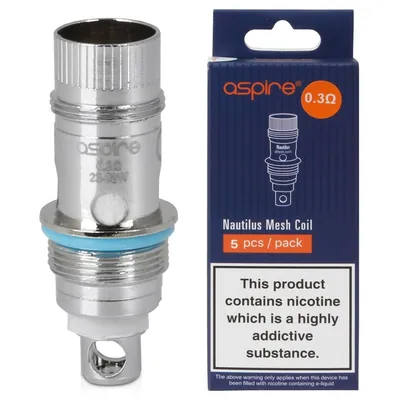
Here are some of the coils in stock right now. Always check the coil is listed as compatible with your tank or kit before ordering, because coil heads are rarely interchangeable between brands.
Look for the resistance and wattage range printed on each coil. Start at the bottom of that range and step up until the flavour peaks.
If you are deciding between a mouth to lung and a sub-ohm setup as a whole, our MTL tank vs sub-ohm tank guide covers the bigger picture.
Buying a five pack rather than singles nearly always works out cheaper per coil.



Quick answers
Are mesh coils better than ceramic coils?
Neither is better overall. Mesh gives bold flavour and more vapour; ceramic is known for consistent flavour and fewer dry hits.
Do ceramic coils last longer?
They are often said to, but lifespan depends mostly on liquid sweetness, wattage and how often you vape.
Which Smok Nord coil is ceramic?
The Nord coil range we stock includes a 1.4 ohm ceramic option alongside 0.6 and 0.8 ohm mesh.
Do I need to prime a ceramic coil?
Yes. Let any new coil soak for a few minutes before the first puff.