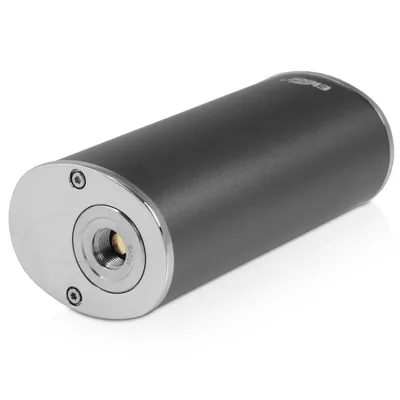
Use a decent USB plug, charge on a hard surface, stay in the same building and unplug when it is full. That is most of it, but the reasons behind each habit are worth two minutes, because they are what stop a cheap adapter turning into a bad evening.
The short version
- Most kits charge at 5V over USB-C. A good branded plug matters more than the cable.
- Charge on a desk or worktop, never on a bed, sofa or pile of clothes.
- UK fire services advise against charging lithium devices overnight or unattended.
- Hot, swollen, hissing or smelly while charging? Unplug at the wall and move away.
The plug matters more than the vape
Almost every current pod kit and mod charges over USB-C, with a few older kits still on Micro-USB. The device has its own charging circuit that controls the battery. Your plug's job is to deliver clean, steady 5V power, and that is where cheap unbranded adapters fall down.
A phone fast charger is generally fine. USB-C fast chargers start at 5V and only raise the voltage if the device asks for it, and vape kits that do not support fast charging simply take the standard rate. Many mods list 2A fast charge in their specs, which most decent plugs supply easily.
What to avoid: no-name plugs with no safety markings, cables with frayed ends or bent connectors, and anything that gets hot to the touch.
Where you charge counts
Lithium batteries warm up a little while they charge. That is normal, as long as the heat has somewhere to go. A vape charging on a duvet or sofa cushion is wrapped in insulation and sitting on something that burns, which is the worst combination you could pick.
Pick a hard, flat surface away from curtains, paper and fabric: a desk, a kitchen worktop or a shelf. Keep it out of direct sun so it is not starting warm. And charge it in a room you are actually in, so you would notice if anything changed.
The same goes for any device with a lithium battery. If your phone charger lives on the bedside table, the vape does not have to share it.
The overnight question
Your vape's charging circuit is designed to stop when the battery is full, so leaving it plugged in is not supposed to overcharge it. The problem is everything else that can go wrong: a failing plug, a damaged cable, a fault in an old battery. If that happens while you are asleep, you lose the most important safety feature in the house, which is you noticing.
That is why UK fire and rescue services consistently advise not to leave lithium devices charging overnight or while you are out. A typical 1000mAh pod kit on a 1A charge is full in roughly an hour to an hour and a half, so there is no need to.
Tap your usual routine below.
When do you usually charge your vape?
Switch to charging in the evening while you are up. Most kits are full in an hour or so.
Fine while you are there. Unplug it when you leave for the day.
Fine while you are driving. Never leave it plugged in or loose in a parked car, especially in summer.
That is the ideal. Unplug it once it is full.
Mods with removable batteries
Most mods that take 18650 or 21700 cells will charge them through the USB port, and for occasional top-ups that is fine. The same rules apply: decent plug, hard surface, stay nearby.
For everyday charging, a dedicated external charger is the better habit. It charges each cell on its own circuit, usually shows each cell's voltage, lets you choose a gentler rate and means you can swap in fresh cells and keep vaping. Our guide to external chargers vs USB charging goes through it properly.
Whichever you use, take the cells out of the charger once they are full and put them in a case. A charger is not a storage box.
Charging myths that refuse to die
Plenty of charging advice was true for older battery types and has stuck around long after it stopped applying. Lithium-ion behaves differently, so some of what you have heard is simply out of date.
The short version: partial top-ups are fine, good fast chargers are fine, and the warning signs below always win. If a device gets hot, swells, hisses, smells of chemicals or the port looks scorched, unplug it at the wall if you can do it safely, move it onto a hard surface away from anything flammable and stop using it. Our guide to a hot or swollen vape battery covers what to do next.
Tap the cards to flip them.
Charging on the move
A power bank is a perfectly good way to top up a pod kit while you are out, as long as it is a known brand and the cable is in good shape. Charge it in your hand or on a table, not buried in a bag where heat builds up.
Car USB sockets work too, but only while you are in the car. Never leave a vape charging or sitting on the dashboard in a parked car, because cabins in summer sun get far hotter than the air outside. Our guide to storing vapes and batteries has the details.
If you want a kit that lasts longer between charges, browse our vape kits and compare the battery capacity on each listing.
Your pod kit feels hot and smells odd while charging. What should you do first?
Quick answers
Can I charge my vape with my phone charger?
Usually, yes. A branded phone charger, including USB-C fast chargers, supplies standard 5V to devices that do not ask for more.
Is it safe to charge a vape overnight?
UK fire services advise against leaving lithium devices charging overnight or unattended. Most kits charge in an hour or two, so charge in the evening instead.
How long does a vape take to charge?
Typically between 30 minutes and two hours, depending on battery size and charge rate. A 1000mAh kit on 1A takes roughly an hour to an hour and a half.
Why does my vape get warm when charging?
A little warmth is normal. If it gets too hot to hold comfortably, swells or smells of chemicals, unplug it and stop using it.