The cotton in your coil is the delivery system: it soaks up liquid and feeds it to the hot wire. Get the amount right and you get clean, full flavour; too much and you get dry hits, too little and you get leaks and spitting. Here is how to wick like you have done it for years.
The short version
- Use organic cotton made for vaping, nothing with additives.
- The cotton should slide through the coil with slight resistance.
- Trim the tails to reach the juice ports, then fluff them out.
- Prime it well and fire low at first.
What the wick does
The wick, usually cotton, has one job: draw liquid from the tank and hold it against the coil, where the heat turns it into vapour. It does this through capillary action, the same effect that lets a paper towel soak up a spill.
Pre-made coils come wicked from the factory. If you use a rebuildable atomiser, you wick it yourself every time you change the cotton, which is often every few days to a week.
Good wicking is the single biggest skill in rebuilding. A perfect coil with bad cotton will dry hit or leak; an average coil with great cotton can taste excellent.
Too tight, too loose, just right
The amount of cotton matters more than almost anything else. Too much packed into the coil, and liquid cannot flow fast enough, so you get dry hits. Too little, and liquid floods past, causing leaks and spitting.
The test most rebuilders use: the cotton should slide through the coil with a slight tug of resistance, without deforming the coil. If you have to force it, it is too tight. If it falls through, it is too loose.
It takes a few attempts to calibrate your fingers, so do not worry if the first couple of wicks feel like guesswork. The comparison below shows what each looks and feels like.
Wicking a coil, step by step
Here is the basic process for wicking a single coil in an RTA or RDA. The details vary between decks, especially how long the tails need to be, so check your atomiser manual for the exact length.
Take your time with the tails. In an RTA, they need to reach the juice ports without blocking them or bunching up. Thinning and fluffing the ends helps them sit neatly and soak quickly.
Always prime generously. Fresh cotton can take a surprising amount of liquid to saturate fully, and dry patches near the coil are the cause of the first-puff dry hit.
- Prepare the cottonPeel a strip roughly the width of the coil and taper one end.
- Thread it throughTwist the tapered end and pull it through until it sits snug.
- Trim the tailsCut each side to the length your deck needs.
- Fluff and positionComb the tails out and tuck them over or into the juice ports.
- Prime wellSoak the cotton thoroughly, including the tails.
- Fire lowStart at low power and step up.
Wicking myths
Every rebuilder has a favourite wicking method, and forums are full of strong opinions. Some are personal preference, others are just wrong. Tap each card to see which is which.
One common belief is that more cotton always means more flavour. It does not. Packing extra cotton in restricts flow and leads to dry hits. The right amount gives the best flavour.
Another is that any cotton will do. Ordinary cosmetic cotton pads or balls can contain bleach or other treatments that are not meant to be heated and inhaled. Use cotton sold for vaping.
Cotton and supplies
You will find vaping cotton in our cotton and wick section. Many vapers keep a pack of cotton and a few spare pre-made coils together, so a rewick takes five minutes.
If you are new to rebuilding, our guide to RTAs, RDAs and RDTAs explains the different atomisers. Wire choice matters too, and the guide to coil wire types covers that.
Store cotton in a sealed bag or box so it stays clean and dry. Cotton picks up smells and moisture easily, which can affect the taste of your first few puffs.
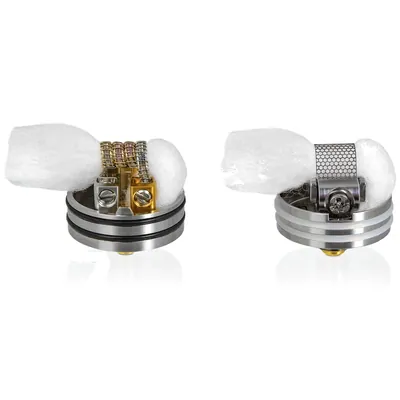
Wicking checklist
Before closing up your atomiser, run through this list. It catches the most common wicking mistakes, from cotton that is too tight to tails that block the juice ports.
When you rewick, look at the old cotton as you take it out. Black or crusty cotton near the coil but clean tails means the coil is running hot or the liquid is sweet. Dry, pale tails mean the wick is not drawing enough.
Change your cotton when the flavour fades or the cotton darkens. On a well-tuned build, that is often every few days to a week, depending on liquid.
Quick answers
How much cotton should I use in my coil?
Enough that it slides through with slight resistance, without distorting the coil.
Why does my new wick give dry hits?
Usually it is too tight or not fully primed. Thin the cotton slightly and soak it well.
How often should I change the cotton?
Every few days to a week for most rebuilders, or when flavour fades or the cotton darkens.
Can I use normal cotton for vaping?
Use cotton made for vaping. Cosmetic cotton may contain treatments not meant to be heated.